

PPC Integrity & Traffic Intelligence
PPC Click Fraud: Why Arrival Is Not Interest
Pay Per Click advertising is supposed to be simple: someone clicks, lands on your website,
and that click represents genuine interest. But what happens when the visitor arrives,
does nothing, leaves after one second, and still costs you money?
A click is not intent. Arrival is not interest. A drive-by is not a customer visit.
The Problem With Modern PPC Traffic
PPC fraud is no longer only about obvious bots repeatedly clicking ads. The modern problem
is more subtle. A paid click can look valid inside an advertising platform while showing
no meaningful human behaviour on the website itself.
That means advertisers may be paying for traffic that arrives but never behaves like a
real prospect.
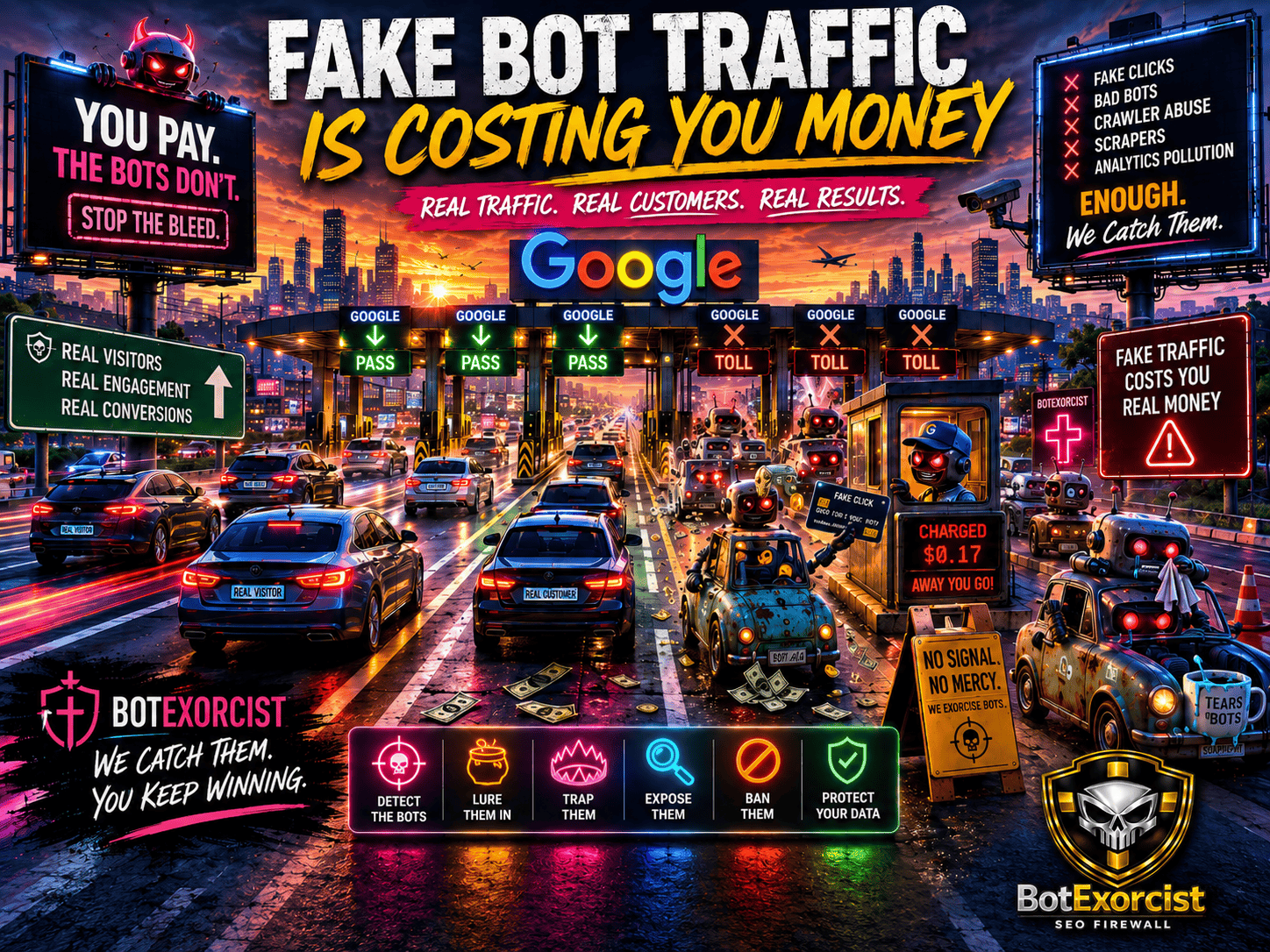
A no-signal paid visit may look like this:
- The ad click is recorded.
- The landing page loads.
- No scroll happens.
- No click happens.
- No form interaction happens.
- No second page is visited.
- The session disappears after one second.
That is not a customer visit. That is a paid arrival with no supporting evidence of human interest.
This is why BotExorcist
treats PPC integrity as an evidence problem, not a trust problem.
What PPC Click Fraud Actually Does To Your Budget
PPC click fraud happens when ads are clicked without genuine commercial intent.
The click may come from a bot, proxy, click farm, competitor, low-quality traffic source,
or automated system.
Common sources of PPC fraud and low-quality paid traffic include:
- Bots and automated scripts.
- Click farms.
- Competitor clicks.
- Proxy and VPN traffic.
- Repeated clicks from the same IP or network.
- Out-of-area paid traffic.
- Non-human paid arrivals.
- Low-quality partner or display network traffic.
The damage is not only financial
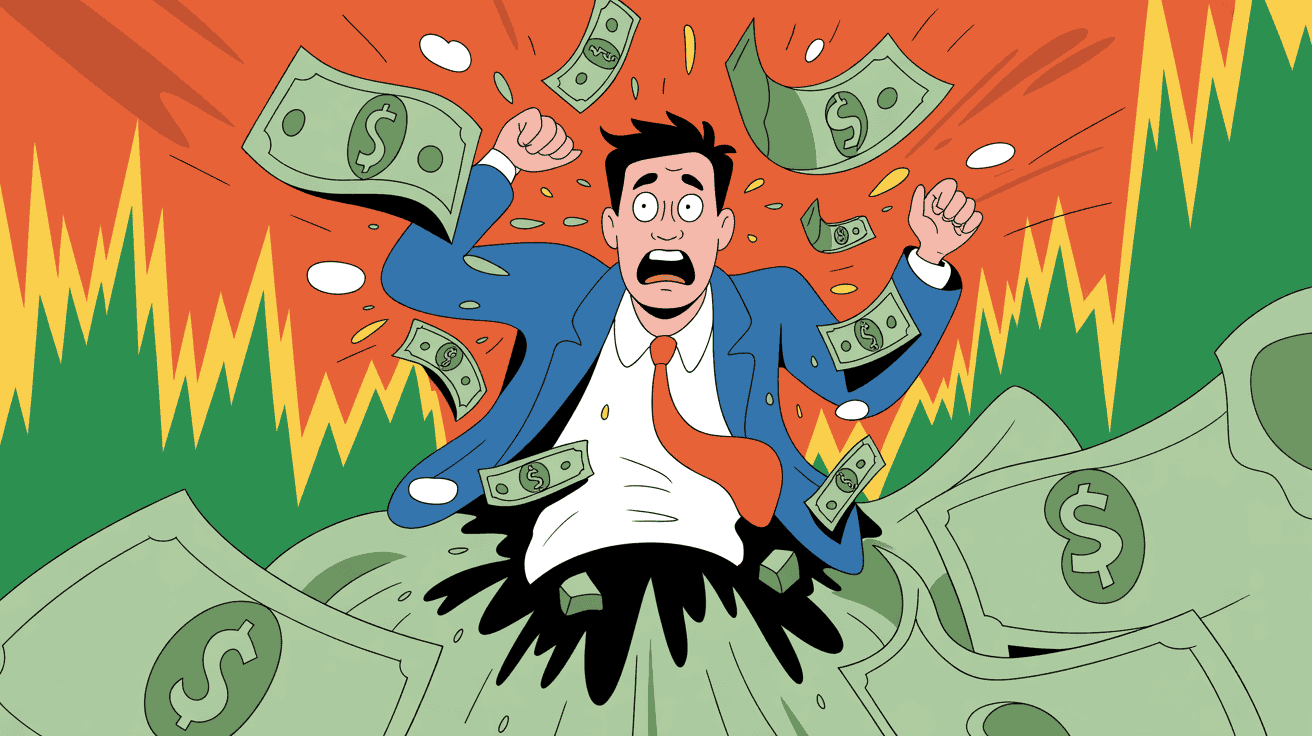
The obvious loss is wasted budget. But the deeper damage is data pollution.
Fake or no-signal traffic can make a good campaign look bad.
- Your conversion rate looks weaker than it really is.
- Your bounce rate becomes polluted.
- Your cost per lead rises artificially.
- Your landing page may be blamed unfairly.
- Your keyword decisions become distorted.
- Your geo-targeting data becomes less reliable.
- Your campaign optimisation decisions become based on bad evidence.
If your analytics cannot separate real visitors from no-signal paid arrivals,
your PPC reporting cannot be fully trusted.
The Doorstep Test: Did The Visitor Actually Show Interest?
Imagine someone arrives at your business premises. They do not knock. They do not ring
the doorbell. They do not say hello. They do not leave a note. They do not ask a question.
They simply appear at the doorstep and leave.
Should that be treated as genuine commercial interest?
That is the problem with many paid clicks. The platform may record an arrival,
but the advertiser needs to know what happened after that arrival.
A real prospect usually leaves some kind of signal:
- Time on page.
- Scroll activity.
- Click activity.
- Touch or pointer activity.
- Form focus.
- Navigation to another page.
- Valid enquiry or conversion behaviour.
If none of those signals exist, then the advertiser should not be forced to pretend
the visit was meaningful.
Why “Genuine User Interest” Must Be Auditable
Advertising platforms may describe a click as valid, billable, or associated with user interest.
But a stated standard is not the same as an auditable standard.
If an advertiser is charged for a click, the advertiser should be able to ask:
- Did the visitor stay on the page?
- Did the visitor scroll?
- Did the visitor click?
- Did the visitor interact with a form?
- Did the visitor visit another page?
- Was the visitor inside the target location?
- Was the IP linked to repeated no-signal behaviour?
- Was there any evidence of human presence?
If the only evidence is that an IP arrived and immediately left, the advertiser has proof
of arrival. They do not yet have proof of interest.
BotExorcist
helps website owners inspect the behaviour behind the click, instead of blindly accepting
every paid arrival as meaningful traffic.
The 1-Second Paid Click Problem
A one-second bounce is not automatically fraud. But a one-second paid visit with no scroll,
no click, no dwell, no form activity, and no second page should not be treated as a strong
sign of genuine interest.
A suspicious no-signal paid click may show:
- A paid click marker such as
gclid,gbraid, orwbraid. - A landing page request.
- No scroll or click signal.
- No form interaction.
- No meaningful dwell time.
- No follow-up pageview.
- An exit within the gate window.
That kind of traffic should be separated from real visitor behaviour. It may still be logged,
but it should not be allowed to pollute conversion analysis, dwell averages, or human engagement reports.
This is where human clearance matters
BotExorcist uses human-signal logic to help distinguish between:
- Real visitors.
- Verified crawlers.
- No-signal paid arrivals.
- Bot probes.
- Repeated suspicious IPs.
- Suspicious networks and ASNs.
The goal is not to assume every short visit is fraud. The goal is to stop unverified
traffic from pretending to be useful engagement.
Why Normal Analytics Is Not Enough
Most analytics systems are built to count visits, sessions, pageviews, events, and conversions.
That is useful, but it does not always tell you whether the traffic was clean.
A website can receive many types of traffic that look like activity but do not represent
real prospects.
Traffic pollution can come from:
- Bots and scanners.
- Fake referrers.
- Proxy traffic.
- VPN traffic.
- Automated paid-click arrivals.
- Background AJAX requests.
- Sitemap probes.
- Invalid crawler behaviour.
If these signals are mixed into your normal analytics, your reports become polluted.
Your landing pages may look weaker than they are. Your PPC campaigns may look less profitable
than they are. Your SEO engagement signals may become harder to interpret.
The better question is not only:
How many clicks did we get?
The better question is:
How many clicks produced auditable human behaviour?
What PPC Fraud Detection Should Actually Look For
Traditional click fraud detection often focuses on repeated clicks, suspicious IPs,
high click-through rates, and geographic anomalies. Those are still useful signals,
but they are not enough by themselves.
Advertisers should also inspect what happened after the click.
Useful PPC integrity evidence includes:
- IP address.
- ASN and organisation.
- Country, region, and city.
- Device and browser data.
- Landing page.
- Paid-click marker capture.
- Time between click marker and page session.
- Dwell time.
- Scroll and click activity.
- Form interaction.
- Repeated paid arrivals from the same IP or network.
- No-signal sessions from the same ASN or CIDR.
- Out-of-area paid traffic.
- Invalid or fabricated form data.
One suspicious click may not prove much. But repeated no-signal paid clicks from the same
IP, network, location, or usage type create a pattern that deserves attention.
PPC Integrity Is Not The Same As Blocking Everything
There is a dangerous mistake some tools make: they detect suspicious paid traffic and
immediately block it.
That may sound satisfying, but it can destroy evidence.
For PPC integrity, you often want to observe first
- Which IPs keep arriving?
- Which networks repeat?
- Which ASNs produce dead paid arrivals?
- Which regions are outside your target area?
- Which paid clicks show no human signal?
- Which sessions look automated?
That is why BotExorcist treats PPC integrity as an evidence and reporting layer.
The goal is not to hide suspicious traffic. The goal is to expose it clearly.
Learn more about BotExorcist
and how it helps separate real visitors from polluted traffic signals.
The Legal And Ethical Gray Zone
Click fraud is difficult to fight because responsibility is spread across many parties:
advertisers, ad platforms, publishers, ad networks, traffic partners, fraudsters,
analytics tools, and automated systems.
The advertiser pays the bill, but the advertiser often has the least visibility.
The core problem is attribution opacity
When a charged click arrives, the advertiser often cannot independently verify whether it came from:
- A real prospect.
- A bot.
- A proxy.
- A VPN.
- A mobile carrier network.
- A platform or partner system.
- A scraper.
- A competitor.
- An unknown non-transparent source.
That is why the minimum standard should be auditable. If a click is charged, the post-click
behaviour should be visible enough for the advertiser to understand what they paid for.
How Advertisers Can Protect Themselves
Advertisers should not rely only on platform-side invalid-click filtering.
They should build their own evidence layer.
A stronger PPC protection workflow should include:
- Landing-page behaviour tracking.
- Paid-click marker capture.
- IP and ASN logging.
- No-signal session detection.
- Form interaction tracking.
- Geographic mismatch reporting.
- Repeat offender analysis.
- CIDR and network grouping.
- Conversion validation.
- Invalid form-data detection.
- Campaign-level evidence reports.
The goal is not paranoia. The goal is accountability.
If you are spending money on clicks, you deserve to know whether those clicks are
producing human behaviour.
How BotExorcist Helps
BotExorcist
helps website owners and advertisers inspect the traffic behind the numbers.
BotExorcist can help identify:
- One-second no-signal bounces.
- Paid-click arrivals with no human behaviour.
- Repeated suspicious IPs.
- Suspicious ASNs and network patterns.
- Bot probes and scanner behaviour.
- Invalid sitemap and crawler noise.
- Traffic that should not be counted as real engagement.
Instead of blindly counting every arrival as a meaningful visit, BotExorcist helps you
separate traffic into clearer categories:
- Real visitors.
- Verified crawlers.
- Paid-click arrivals.
- No-signal sessions.
- Bot probes.
- Repeat offenders.
- Suspicious infrastructure.
That gives you cleaner data, stronger PPC evidence, and a more honest view of what is
happening on your website.
The BotExorcist Position: A Click Is Not Enough
The central issue is simple:
A click is not intent. Arrival is not interest. A drive-by is not a customer visit.
If an IP arrives after a paid click and leaves without any signal, that visit should not be
treated the same as a genuine prospect.
It should be recorded. It should be classified. It should be reported.
And if the same patterns repeat, advertisers should have evidence.
That evidence can support:
- Campaign optimisation.
- Budget decisions.
- Landing-page evaluation.
- Geo-targeting review.
- Platform support requests.
- Invalid-click complaints.
- PPC integrity reporting.
Final Thought
PPC advertising can work. But only when the data is clean enough to trust.
If your reports are filled with dead arrivals, no-signal bounces, fake engagement,
invalid geography, repeated IPs, or suspicious networks, your campaign decisions
will be built on polluted evidence.
The question is not only:
Did someone click?
The real question is:
Did the click produce auditable human interest?
In modern PPC, counting clicks is not enough.
You need to verify the signal behind them.