


The Complete Paid Advertising Management Guide for Businesses in 2026
If I’m managing paid advertising in 2026, I’m not running campaigns, I’m building systems that turn spend into predictable revenue. That’s the difference most businesses miss. Anyone can launch ads. Very few can make them profitable consistently. The platforms are smarter now, automation is stronger, and the margin for sloppy execution is gone. If your inputs are weak, your results collapse. If your system is tight, ads become one of the most scalable growth levers you have. This guide is exactly how I approach it when real money is on the line, not theory, not recycled advice, but what actually works when performance matters.
Most businesses don’t have an ads problem. They have a conversion problem.
And paid traffic just exposes it faster.
Step 1: Start With the Money or Don’t Start at All
Before I even open Google Ads or Meta Ads, I anchor everything in the numbers. If you don’t know what a customer is worth, you have no business running ads. That might sound harsh, but it’s accurate. This is where most campaigns fail before they even begin.
I calculate four things immediately, average deal value, lifetime value if there’s repeat business, lead to sale conversion rate, and the maximum acceptable cost per acquisition. Once those are clear, everything else becomes mechanical. If you close one in five leads and each deal is worth R15,000, then each lead carries a working value of R3,000. That number dictates your ceiling. Go above it, you lose money. Stay below it, you scale.
If your CPA looks good but your bank account doesn’t, you’re tracking the wrong thing.
I’ve seen businesses spend thousands thinking they’re winning because leads are cheap, while sales tell a completely different story. This step eliminates that illusion completely.
Step 2: Choose Platforms Based on Intent, Not Hype
Most people pick platforms based on what’s trending. That’s how budgets disappear.
I choose based on buyer behaviour. On Google Ads, demand already exists. People are searching, comparing, ready to act. These campaigns convert well, but they cap out based on search volume. On Meta Ads and TikTok Ads, I’m interrupting attention. That means I need to create demand with messaging and creative, but the upside is scale.
On LinkedIn Ads, I’m buying precision. Expensive clicks, but high value outcomes when the targeting is right.
Platform choice is not a marketing decision. It’s a psychology decision.
If your audience isn’t in buying mode, your ads need to create that state. If they already are, your job is simply to capture it before your competitor does.
Step 3: Build the Funnel First or Burn the Budget
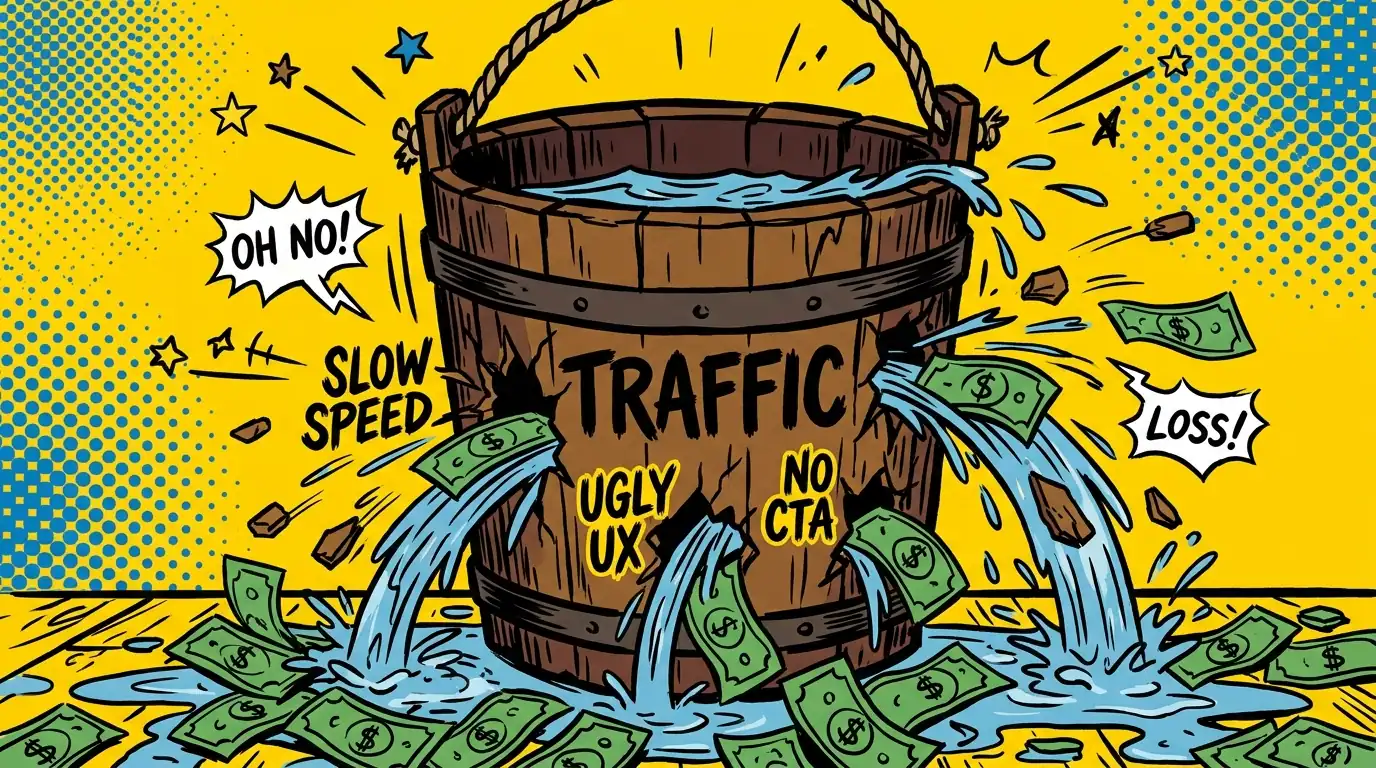
Running ads to a weak funnel is like pouring water into a bucket full of holes.
It doesn’t matter how much you pour, you’re still losing.
A proper system flows cleanly. The ad hooks attention. The landing page continues the same message without breaking the thread. The offer is clear and frictionless. The follow up closes the deal. If any part of that chain breaks, performance drops.
Clarity beats cleverness every time.
Above the fold, I want one thing, a message that instantly answers what this is, who it’s for, and why it matters. If a visitor has to think, you’ve already lost them. Most landing pages fail because they try to impress instead of convert.
If your landing page isn’t converting, your ads aren’t the problem.
Step 4: Creative Is the Targeting Now
In 2026, targeting is largely handled by the platform. Creative is what drives distribution.
On Meta Ads especially, the algorithm decides who sees your ad based on how people engage with it. That means your message determines your audience.
So I don’t build ads. I build angles.
Pain angle. Outcome angle. Curiosity angle. Authority angle.
Then I create variations across each. Different hooks. Different openings. Different visuals. The first three seconds decide everything. If you don’t stop the scroll, nothing else matters.
Here’s the uncomfortable truth most businesses avoid.
Your ads aren’t underperforming because of targeting.
They’re underperforming because they’re forgettable.
Relevance beats production quality. Every time.
Step 5: Structure Campaigns So Data Tells the Truth
Messy accounts produce useless data. And useless data leads to bad decisions.
Inside Google Ads, I separate campaigns by intent. Branded traffic, high intent keywords, exploratory searches, they each live in their own structure. Inside Meta Ads, I separate testing from scaling. New ideas go in one environment, proven performers in another.
If you mix everything together, you don’t have a strategy. You have noise.
Clean structure gives you clarity. Clarity gives you control.
Step 6: Track Revenue or Stay Blind
If you’re only tracking leads, you’re guessing.
I connect campaigns to real outcomes using tools like Google Analytics and ideally a CRM. I want to know exactly which campaign generated which lead, and which lead turned into actual revenue.
Cheap leads are often the most expensive mistake.
I’ve seen campaigns flood pipelines with low quality leads that never convert, while smaller, more targeted campaigns quietly drive real revenue. Without tracking, you would never know the difference.
Revenue is the only metric that matters.
Everything else is a distraction.
Step 7: Treat Budget Like Capital, Not Spend
Ad budget is not something you “use up”. It’s something you allocate.
I treat it like an investment portfolio. The majority goes to proven campaigns that are already producing results. A portion goes into testing new creatives and angles. A smaller slice goes into experiments that could unlock the next level.
If you’re not testing, you stagnate.
If you’re only testing, you go broke.
Balance is what allows you to scale safely.
Step 8: Optimise With Precision, Not Panic
Most people optimise emotionally. One bad day and they start changing everything.
That’s how you destroy performance.
I look for patterns, not moments. If click through rates are low, it’s a creative issue. If conversion rates are low, it’s a landing page or offer issue. If leads aren’t closing, it’s a sales or qualification issue.
Every problem lives in a specific layer.
Fix the wrong layer, and nothing improves.
Change one variable at a time. Always. Otherwise you’re just guessing and calling it optimisation.
Step 9: Scale Without Breaking What Works
Scaling is where most campaigns collapse.
People increase budgets too fast, the algorithm destabilises, and performance drops. Then they panic and shut everything down.
I scale gradually. Controlled increases. Duplicate what works instead of overloading it. Introduce new creative before fatigue sets in.
The algorithm needs stability to perform.
Respect that, and scaling becomes predictable. Ignore it, and everything falls apart.
Step 10: Turn Ads Into a Growth Engine
Paid ads should not exist in isolation.
They should feed everything.
Winning keywords from Google Ads inform SEO strategy. High converting messaging shapes landing pages and sales scripts. Visitors from organic traffic get pulled back in through retargeting on Meta Ads.
This is where things compound.
Instead of separate channels, you build a system where each part strengthens the others.
That’s how you stop relying on ads… and start using them to accelerate everything else.
Final Thoughts
Paid advertising in 2026 is not about tricks, hacks, or chasing platform updates. It’s about building a system that consistently turns spend into revenue.
Most businesses won’t do this. They’ll launch campaigns, tweak a few settings, and hope for results.
That’s why most businesses fail with ads.
You have two options. You can try piece this together yourself, test, fail, optimise, and eventually get there. Or you can shortcut the process and build it properly from the start with a system that’s already been proven to work.
Either way, the outcome is the same.
The difference is how much time and money you burn getting there.