
You need cover while reception is occupied or after hours
New-patient details, routine booking requests and common non-clinical questions can be captured without interrupting chairside work.
Protect focus and capture demand.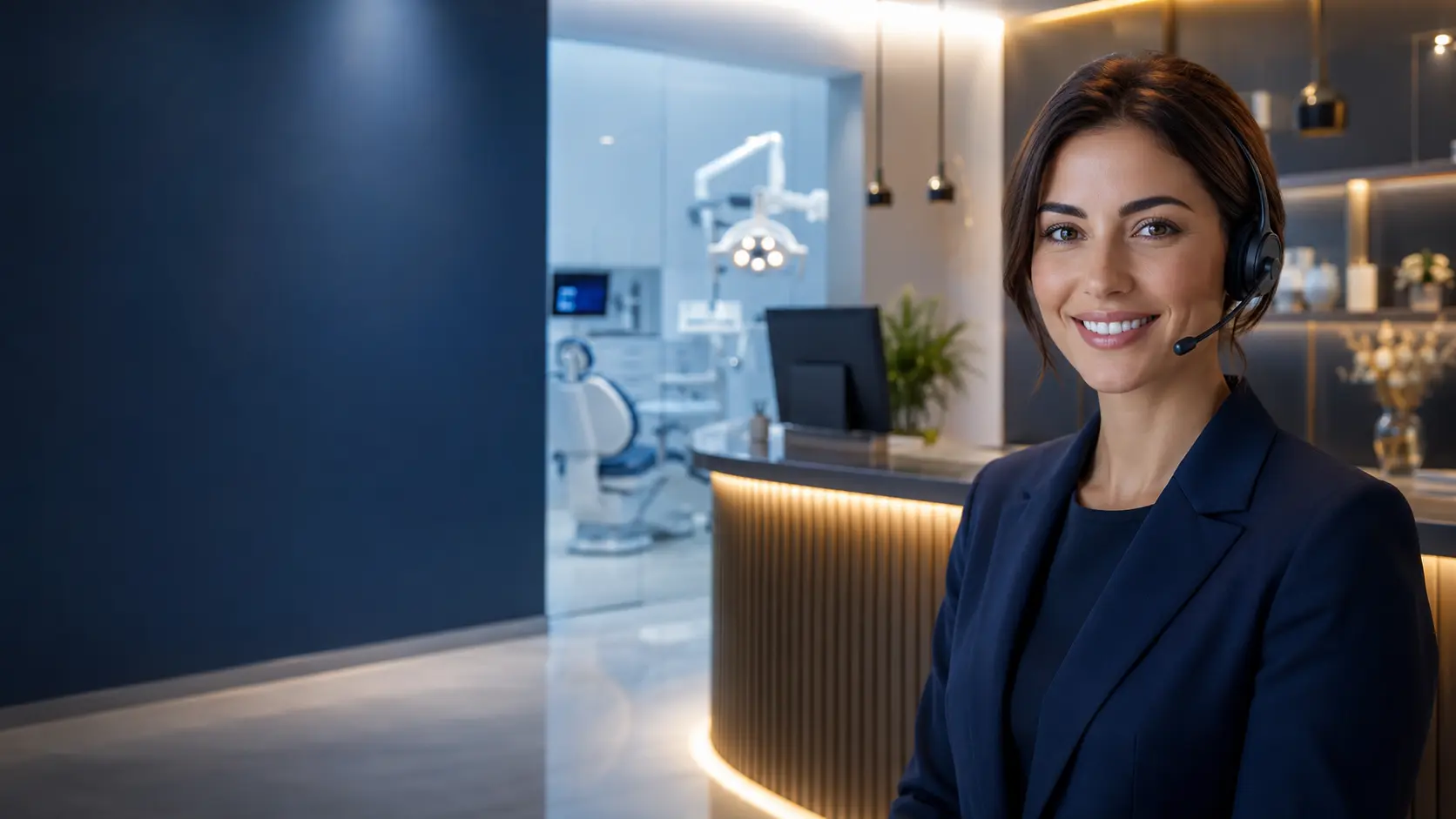
AI communication for dental practices
The AI receptionist that keeps new patients moving toward the chair. Answer new-patient calls, schedule appointments, handle routine practice questions, support recalls and reduce front-desk interruptions while your team cares for patients.
The opportunity you may not be seeing
SEO Clicks Pro uses AI reception for dentists to protect the booking opportunity without asking the AI to make clinical decisions. A patient calling while reception is checking somebody in or helping at the desk does not see the workload - they simply hear ringing and decide whether to try again.
In a dental practice the AI is most useful when it handles administrative certainty: capture a new patient, recognise the appointment need and move the request toward the diary or the right person.
Fit the agent to the practice
The agent should remove repetitive reception work without crossing the line on clinical judgment.
New-patient details, routine booking requests and common non-clinical questions can be captured without interrupting chairside work.
Protect focus and capture demand.Booking logic, recall outreach, cancellation recovery and provider-specific availability become more valuable than simple call answering.
Use the agent to support chair utilisation.The conversation has to route across branches while preserving one consistent patient experience and clear escalation rules.
Coordinate the network without flattening each practice.Built around your working day
It can answer approved non-clinical questions, support routine booking and recall conversations, and route pain or treatment concerns to the practice instead of improvising clinical guidance.
Answer calls, collect the reason for the visit and offer the appropriate appointment route.
Book, reschedule or cancel appointments where the practice system and rules support it.
Contact permitted inactive or due-for-recall patients and guide them toward the next appointment.
Explain approved information about services, preparation, hours, location and payment pathways.
Contact suitable waitlist patients or make rescheduling easier when an appointment changes.
Collect approved insurance or payment information without making promises the practice has not approved.
Identify configured urgent signals and route them to the practice’s approved human process.
Return the reason for contact, appointment details and follow-up status to the practice team.
Inbound and outbound communication
A new patient calls while the receptionist is checking in another patient. The AI collects the reason for the visit, answers approved questions and offers the next available appointment path.
The practice has due-for-recall or missed-appointment records. The AI calls permitted contacts, checks whether they still need care and helps schedule the next appointment.
Lunch hours, busy check-in periods and after-hours enquiries can be captured without forcing the front desk to choose between the patient in front of them and the phone.
The agent can schedule where rules are clear, record a cancellation, create a callback or escalate an urgent concern according to instructions set by the practice.
Built on request
We model the agent on the practice’s appointment types and patient journey, then let reception and clinicians call a private number to test it before patients do.
The knowledge base is assembled from the practice’s approved patient information, services, hours, locations and scheduling rules.
The dental agent receives approved treatment descriptions, provider and location rules, appointment logic, opening language and escalation paths.
We test new-patient, cancellation, recall and urgent-concern scenarios so the team can hear exactly where the agent stops and a person takes over.
Once the conversation logic is approved, we connect only the calendar, CRM, messaging or task systems the practice has authorised.
Dental front-desk flow
The agent can recognise the purpose of the call and protect the boundary between scheduling support and dental judgment.
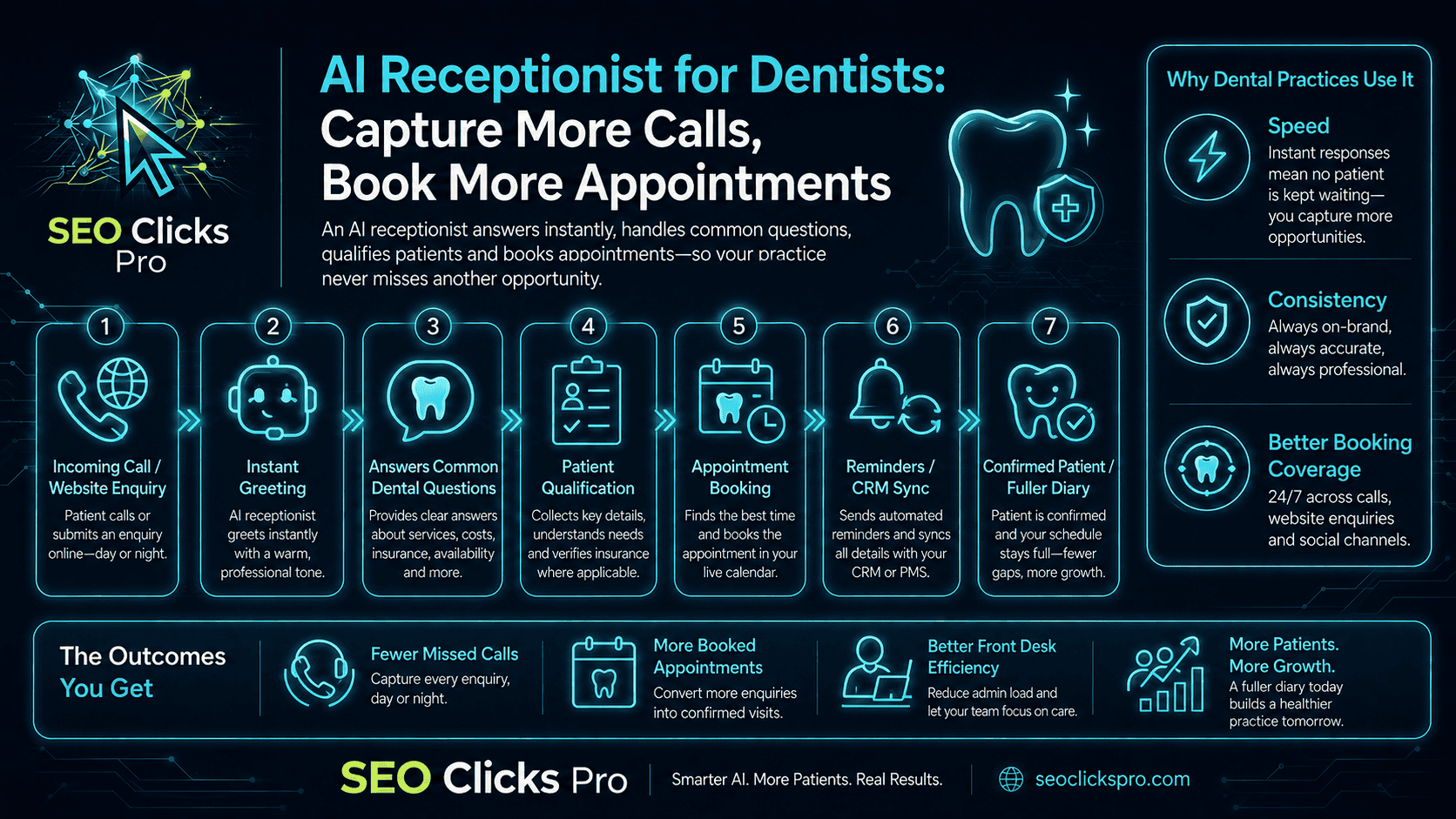
Questions we need answered
Clinical boundaries are set first: what may be described administratively, what must never be diagnosed, and what symptoms or questions require immediate human review.
Always-available coverage
The dental-reception entry level currently includes 200 conversation units; usage, outbound recall work and practice integrations are confirmed before launch.
Frequently asked questions
Before activation we confirm which patient details may be captured, how they are routed and which connected systems are allowed to receive them.
Request an industry agent →No. It should provide approved general information, collect the reason for contact and route clinical questions to the dental team.
Yes, when the practice-management or calendar integration and booking rules are configured and tested.
It can contact approved patient lists and guide patients toward rescheduling or a recall appointment with appropriate consent and opt-out handling.
It can identify configured urgency signals and follow the practice’s approved escalation instructions.
It can explain approved information, but should route coverage-specific or uncertain questions to staff.
Built on request
Tell us which calls burden reception most, how you classify appointment types and when clinical staff must intervene. We will turn that into a private test workflow.
Let patients ask approved practice questions, request appointments, handle recalls or rescheduling and reach the right next step without tying up the front desk.