

Broad traffic leakage
Loose matching and incomplete negatives can buy research, job searches, irrelevant services and weak geography.
Paid search management for US demand
Control search intent, campaign structure, conversion tracking and landing-page experience around qualified enquiries-not inflated click volume.
Paid demand with commercial discipline
Google Ads can place a business in front of active demand quickly, but speed amplifies weak targeting and measurement as easily as it amplifies opportunity. Campaign structure must protect budget before it scales reach.
The work begins with the offers, locations, customer value and qualification rules. Keywords, negatives, match types, ads and landing pages are then organized around the searches the business is prepared to serve.
SEO Clicks Pro manages US campaigns from South Africa through transparent access and reporting. Ad spend remains in the client’s advertising account and is paid directly to the platform.
The commercial problem
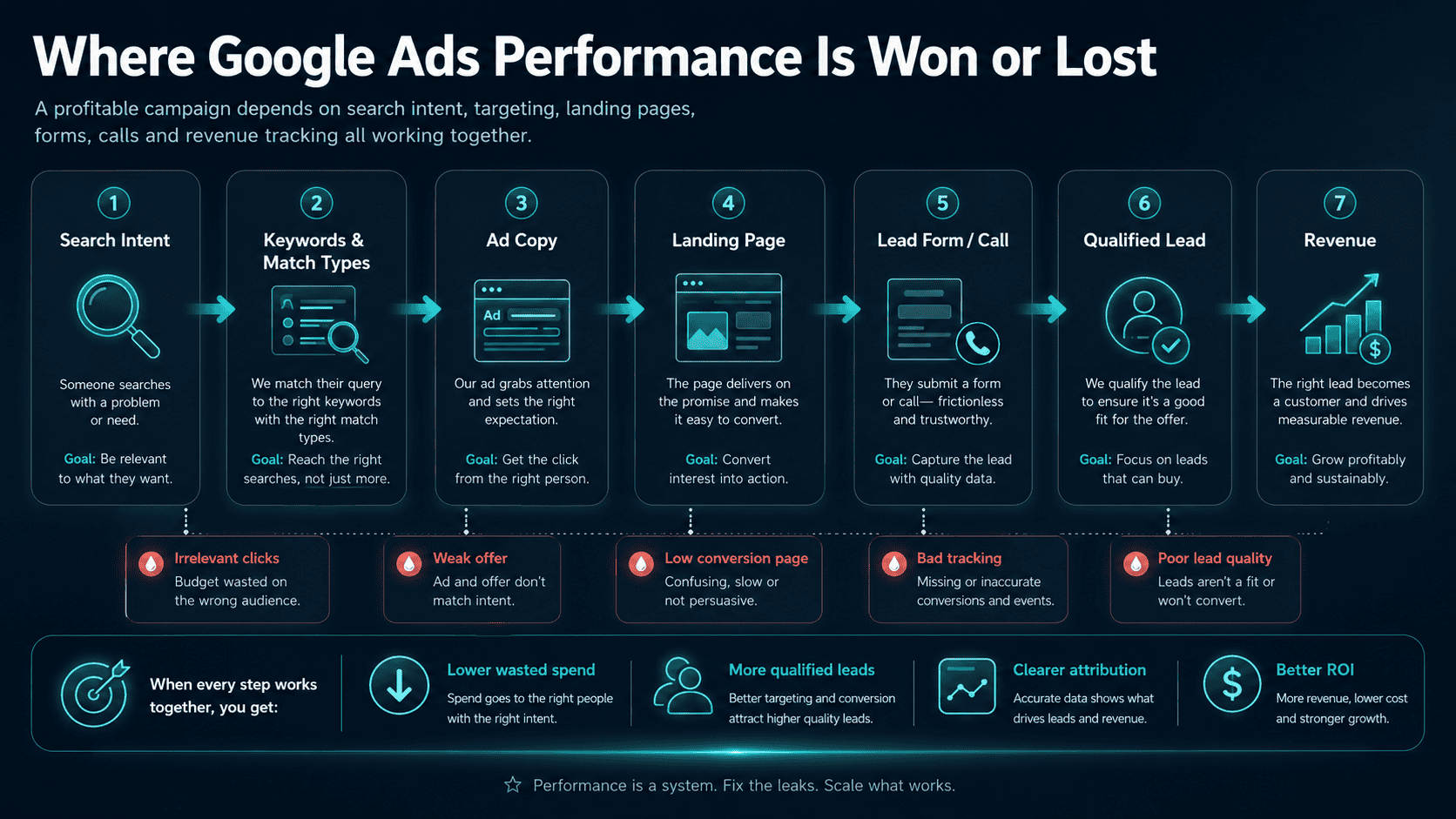
The campaign cannot learn properly when search terms, conversions and lead quality are treated as separate concerns.
Loose matching and incomplete negatives can buy research, job searches, irrelevant services and weak geography.
Button clicks and page views may be counted as leads while calls, forms and qualified outcomes remain unclear.
A relevant keyword can still fail when the destination is slow, generic or unable to support the promise in the ad.
The working scope
The scope links campaign operations to landing-page behavior and downstream lead quality.
Offers, historical performance, conversion actions, geography and competitive results examined before restructuring.
Campaigns and ad groups organized by service, buyer intent, geography and landing-page relevance.
Negatives, match types and query reviews used to reduce obvious waste and surface useful demand.
Messages align with the offer, differentiators, location reality and the destination page.
Forms, calls and meaningful actions configured with clear definitions and testable tracking.
Suspicious patterns, weak engagements and repeat network behavior reviewed as evidence-not automatic accusations.
Who it serves
The service is strongest when lead quality can be discussed and landing pages can be improved.
Businesses where a qualified call or form can justify deliberate campaign management.
Companies targeting defined commercial problems and longer evaluation journeys.
Businesses controlling spend across genuine service areas, metros or states.
PPC integrity
Platform reporting is important, but it should be compared with landing behavior, server-side evidence and lead outcomes where available.
Suspicious activity is documented carefully. Bot-like behavior, rapid exits or repeat network patterns are indicators that require context, not proof of platform wrongdoing.
The practical goal is budget control: identify waste patterns, strengthen exclusions and preserve evidence for decisions or disputes.
The first operating cycle
The first cycle establishes trustworthy tracking and reduces obvious budget leakage.
Review account structure, search terms, settings, conversions, geography and landing pages.
Fix material tracking, targeting, negative and structural issues before increasing spend.
Manage bids, queries, ads, assets and budgets against defined commercial intent.
Compare platform performance with landing behavior and lead-quality feedback.
US commercial scope
The management fee excludes Google Ads spend, which remains controlled and paid by the client. Final pricing reflects account size, markets, campaign complexity and reporting needs.
Every engagement is quoted individually. Published figures are starting points only, not fixed packages.
Straight answers
No invented US office, guaranteed outcomes or hidden delivery chain.
Ask about the US market →US PPC management starts from $300 per month, excluding advertising spend paid to the platform.
No. The client pays Google or another advertising platform directly. Management and media spend remain separate.
Yes. The account stays client-owned, while access, communication and change responsibilities are handled transparently.
No. Market response cannot be guaranteed. Targeting, tracking, landing pages and optimization can be managed accountably.
Yes. Landing-page design and improvement can be included or scoped alongside campaign management.
Traffic-quality evidence can identify suspicious patterns, but no single behavioral signal proves fraud. Findings are documented carefully.
Paid search system
Keyword intent, ad message, landing-page experience, tracking and lead quality have to agree before bidding changes can fix anything.
Let’s build something useful
Share the account condition, monthly spend and lead-quality problem. We will identify the first control points.