
Ranking techniques - round 2
Ranking techniques that still work.
Forty straight answers on the ranking techniques that still move rankings in 2026 - and the ones that quietly stopped working. No shortcuts, no hype, just what actually moves a page up.
- Based in South Africa
- Serving the USA, UK & SA
- SEO, Paid Media & Websites
- Free discovery call
Ranking guide
Ranking techniques explained without hype.
A practical look at content, internal linking, topical authority, earned links and AI visibility signals that still move pages up.
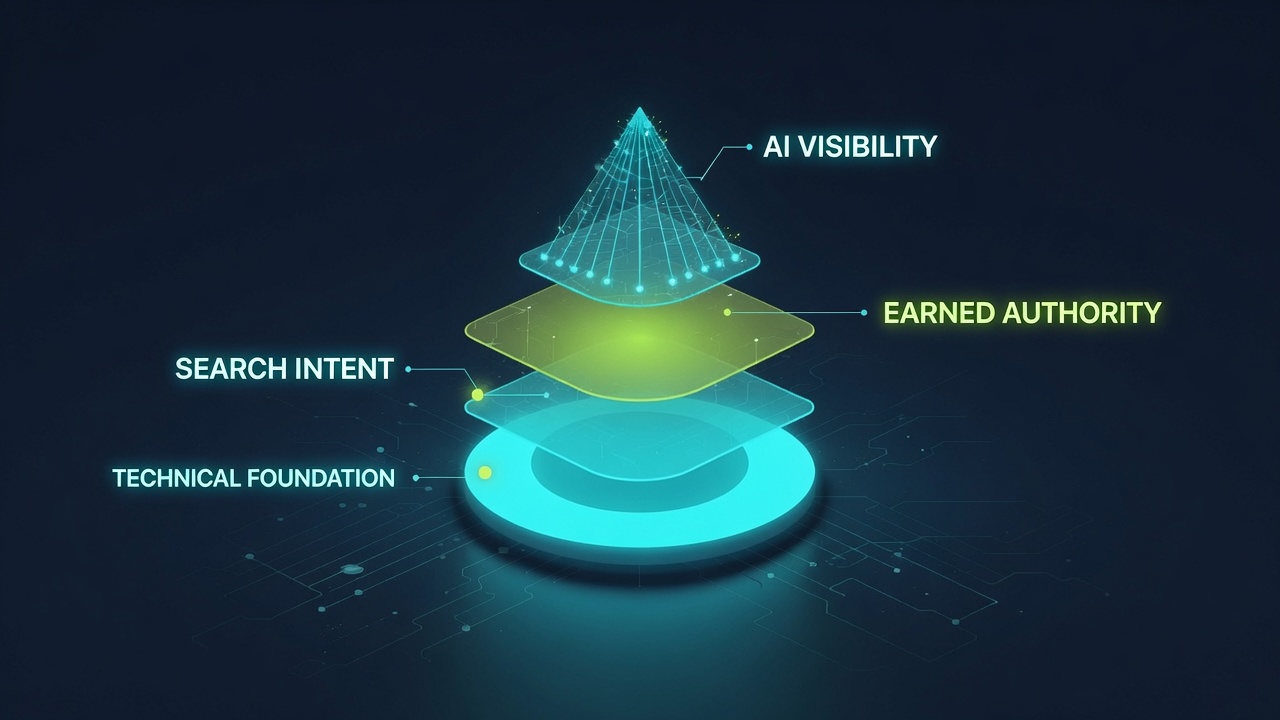
What actually moves rankings
Ranking techniques that still work in 2026.
1. What's the single most important ranking factor right now if I can only focus on one thing?
The most important ranking factor is a page that fully satisfies the search intent better than the current winners. That means the answer is complete, trustworthy, specific, easy to scan and supported by proof. Technical SEO, links, schema and speed all matter, but they cannot rescue a page that fails the search. Build the page someone would stop searching after reading.
2. How do I actually improve rankings with internal linking in 2026?
Internal linking improves rankings when it gives important pages more context and authority. Link from relevant high-value pages to the pages you want to rank, use descriptive anchors, and connect clusters so Google can see the relationship between topics. This is especially useful on sites with many service, location or guide pages: internal links tell Google which pages matter and how authority should flow.
3. Is topical authority still the real ranking advantage or is it overhyped?
Topical authority is real when it reflects actual coverage and expertise, not when it is just a buzzword. A site becomes stronger when it answers the main topic, subtopics, buyer questions, comparisons, objections and practical follow-ups better than scattered competitors. Build clusters around real decisions and link them clearly. A single isolated article rarely proves authority.
4. Do Core Web Vitals still move rankings or are they just a table-stakes thing now?
Core Web Vitals are table stakes, not a magic ranking lever. If the page is slow, unstable or frustrating on mobile, rankings and conversions can suffer. Once the experience is good, extra milliseconds usually matter less than content, trust and authority. Fix performance enough that users can read, compare and act without friction; then spend energy on the page's substance.
5. How important is the title tag for rankings in 2026?
Title tags still matter because they help search engines and users understand the page before the click. A strong title is specific, accurate, intent-matched and compelling without being clickbait. Put the main concept near the front when natural, include the brand where useful and make every important page unique. A title cannot rank a weak page, but it can unlock a strong one.
6. What's the best way to use "information gain" as a ranking technique?
Information gain means adding value the current search results do not provide. Use original data, first-hand experience, better examples, clearer definitions, decision tables, screenshots, pricing context, pitfalls or a sharper process. Do not simply rewrite the top ten results in new words. A page earns ranking advantage when it teaches something useful that was missing from the search result.
7. Can I still rank by updating old content aggressively?
Updating old content can move rankings quickly when the page already has history, links or impressions. The useful refresh is not cosmetic. Add current facts, remove outdated sections, answer missing questions, improve internal links, tighten the title and make the page more complete than the current winners. Changing the publish date without meaningful improvement is not a ranking technique.
8. How much do user engagement signals (clicks, dwell time, pogo-sticking) actually affect rankings?
User engagement matters because search engines learn from whether results satisfy people. You cannot fake that reliably. Improve engagement by matching the query, making the first answer visible, reducing clutter, improving mobile readability, adding proof and making the next step obvious. If users click, read and stop searching, the page is sending the right kind of signal.
9. Is link building still one of the top ranking techniques or has it dropped?
Link building is still one of the strongest ranking levers in competitive markets, but only when the links are relevant and credible. Editorial mentions from real sites, associations, partners, publications, suppliers, research, tools and useful resources still count. Cheap volume has collapsed in value. One relevant link from a trusted source can be worth more than a pile of forgettable placements.
10. What's the smartest way to build ranking power with digital PR right now?
The smartest digital PR creates something worth citing before outreach starts. Publish original data, a useful calculator, a strong industry opinion, a comparison resource, a local study or an expert explanation journalists and niche sites can reference. Then pitch the asset to the people who already cover that subject. Digital PR works when the link is a by-product of usefulness.
11. Does having the keyword in the URL still help rankings?
Keywords in URLs are a small clarity signal, not a major ranking factor. Use short, readable URLs that describe the page and make sense to humans. Avoid changing existing URLs just to add a keyword unless there is a bigger structural reason and redirects are handled properly. Clean URLs support trust and click-through; they rarely win rankings alone.
12. How do I use schema / structured data as a ranking technique?
Structured data helps search engines understand the page and can support rich results, but it is not a direct ranking shortcut. Use accurate schema for the content that genuinely exists: organisation, person, service, product, FAQ, breadcrumb, video, article or local business where appropriate. Bad schema creates confusion. Good schema is a label on real content, not a substitute for it.
13. Is "entity SEO" a real ranking technique or just buzzword bullshit?
Entity SEO is real because search engines need to understand who you are, what you do, where you operate and why you are credible. Use consistent names, profiles, author pages, organisation schema, service pages, reviews, citations and external mentions. This is especially useful for local, professional and specialist businesses because clear entities are easier to trust and cite.
14. What's the fastest ranking technique for a page that's stuck on page 2-3?
For a page stuck on page two or three, the fastest lift usually comes from three actions together: improve the answer, strengthen internal links and add proof. Compare the current top results, fill the missing usefulness gap, make the title more clickable, and link to the page from relevant authority pages on your site. If the market is competitive, earn a few relevant links.
15. Do I still need to worry about exact keyword density or TF-IDF for rankings?
No. Keyword density and TF-IDF are blunt tools for an older version of SEO. Modern pages rank by satisfying intent, covering the topic naturally and demonstrating trust. Use the terms real buyers use, but do not write to a percentage. If the page feels repetitive to a human, it is already too mechanical for search.
16. How powerful is "passage ranking" as a technique?
Passage ranking rewards clear, self-contained sections. A long page can rank for specific subtopics when the relevant section has a direct heading, a clear answer and enough context to stand alone. This does not mean writing fragmented content. It means every important subsection should be useful even when Google or an AI system extracts it separately.
17. Can improving click-through rate from the SERP actually lift rankings?
Improving click-through rate can help because a better result earns more opportunities to satisfy users. Write title tags and meta descriptions that match the query, promise the right outcome and avoid exaggeration. The click is only half the job: the landing page must deliver immediately. Better CTR plus better satisfaction is much stronger than clickbait.
18. What's the current best practice for header structure (H1-H3) for ranking?
Header structure should make the page easier to understand. Use one clear H1, then H2s for major sections and H3s for supporting points. Include natural query language where it helps, but do not force keywords into every heading. Good headers create a logical outline for humans, search engines, screen readers, featured snippets and AI extraction.
19. Is content length still a ranking factor?
Content length is not a ranking factor; completeness is. Some queries need 500 words, others need 5,000. The page should be long enough to answer the intent, compare the options, prove the claims and guide the next step. If words are added only to look comprehensive, they weaken the page. Cut filler and add substance.
20. How do I use competitor SERP analysis as a ranking technique?
Competitor SERP analysis works when you study why pages rank, not when you copy them. Look at intent, format, proof, freshness, media, page type, internal links, backlinks, authorship and missing angles. Then build something more useful or more specific. Copying the current SERP usually keeps you behind it; improving on its weaknesses is the ranking opportunity.
21. Does publishing frequency help rankings?
Publishing frequency helps only when quality and purpose stay high. A site that publishes useful content consistently can build topical authority and crawl momentum. A site that publishes thin pages quickly creates noise, cannibalisation and maintenance debt. The best frequency is the pace at which you can produce pages that deserve to exist and keep them updated.
22. What's the role of brand signals in ranking techniques right now?
Brand signals matter because trusted brands are easier for users and search systems to choose. Direct searches, reviews, mentions, citations, social proof, author visibility and consistent entity information all help build confidence. Brand is not separate from SEO anymore. When people recognise, search for and trust the name, rankings become easier to earn and defend.
23. Can I rank better by optimising for AI Overviews specifically?
You can improve AI Overview visibility by making the page a reliable source for a clear answer. Use concise definitions, structured sections, original evidence, accurate schema, crawlable content and strong E-E-A-T. Classic rankings still matter because AI features draw from indexed web content and ranking systems. Optimise for being useful and citable, not for a gimmick.
24. How important is mobile experience for rankings beyond Core Web Vitals?
Mobile experience matters because the mobile version is the version that counts for most indexing and most users. A page that is hard to read, slow to respond, cluttered with popups or awkward to navigate loses both users and trust. Good mobile SEO means readable text, stable layouts, clear buttons, fast interaction, accessible media and no friction between answer and action.
25. What's the smartest technical ranking technique most people ignore?
The technical ranking technique most people ignore is fixing index quality. Make sure the right pages are indexable, canonical, internally linked, included in sitemaps and not competing with duplicates. Remove or noindex pages that should not be search results. A smaller set of strong, clear pages often performs better than a messy site with hundreds of weak URLs.
26. Do anchor texts still matter for ranking power?
Anchor text still matters because it tells users and search engines what the linked page is about. Use descriptive, natural anchors for internal links and avoid repeating the exact same commercial phrase everywhere. External anchor text is valuable when it occurs naturally. Manipulated anchor patterns can create risk. The best anchor text is clear, relevant and believable in context.
27. Is "content pruning" still a useful ranking technique?
Content pruning is useful when weak pages dilute quality, compete with better pages or waste crawl attention. Do not delete pages just because traffic is low. Decide whether each page should be improved, merged, redirected, noindexed or removed. The goal is a cleaner site where every indexable URL has a reason to exist and a query it can satisfy.
28. How much does author expertise / bylines actually help rankings?
Author expertise helps when the topic requires trust. A byline alone is weak; evidence is stronger. Use author pages, credentials, review notes, first-hand examples, sources and consistent profiles. For legal, finance, health, property, technical and expensive B2B topics, users want to know who is advising them. Search systems look for trust signals because users need them.
29. What's the best way to use freshness as a ranking lever?
Freshness helps when the query deserves current information. Update pages with new data, examples, screenshots, pricing, policy changes, product changes or better recommendations. Some evergreen pages need stability more than constant editing. The ranking lever is not the date; it is the improvement. A refreshed page should be more accurate and useful than it was before.
30. Can I still use "skyscraper" style content as a ranking technique?
Skyscraper content still works only when it is genuinely better, not merely longer. The old formula of copying the top result and adding more words is tired. A modern skyscraper page needs better evidence, structure, examples, design, media, internal links and promotion. Make it more useful, easier to quote and easier to trust.
31. How do I improve rankings for commercial / transactional pages specifically?
Commercial pages rank when they combine search relevance with buying confidence. Clarify the offer, service area, process, pricing context, proof, FAQs, comparisons, objections and next step. Link to them from supporting guides and related services. Do not hide commercial intent behind generic blog language. A money page should help the buyer decide, not just define a keyword.
32. Is site architecture still a ranking technique worth obsessing over?
Site architecture is worth serious attention because it controls discovery, relevance and authority flow. Important pages should sit in a logical hierarchy, receive internal links, and belong to clear topic clusters. Avoid orphan pages, duplicate paths and endless low-value URLs. Good architecture makes the site easier for users to navigate and easier for search engines to interpret.
33. What's the current take on exact-match domains for ranking?
Exact-match domains can still help click clarity, but they do not override weak content or poor trust. They are useful when they also function as a credible brand. They are risky when they encourage doorway pages, thin location networks or a business identity built around one keyword. A strong brand with clear topical authority usually wins the long game.
34. How powerful are "people also ask" and related questions for ranking strategy?
People Also Ask and related questions are useful because they reveal the follow-up questions Google associates with a topic. Use them to improve coverage, headings, FAQ sections and internal links. Do not paste every question blindly. Choose the questions that help the buyer understand the decision and give direct answers that could stand alone in a result.
35. Can improving dwell time deliberately help rankings?
You can improve dwell time by making the page more useful, not by trapping users. Lead with the answer, then provide depth, examples, visuals, proof and clear navigation. Remove slow scripts, clutter and vague introductions. If users stay because the page helps them think, that is a good signal. If they stay because they are confused, it is not.
36. What's the highest-leverage ranking technique for a new or low-authority site?
For a new or low-authority site, the highest-leverage technique is choosing winnable queries. Target specific problems, local modifiers, comparison terms, niche services and long-tail questions where better detail can beat bigger brands. Build a tight cluster, interlink it well, and earn a few relevant mentions. Early SEO is about proving trust in smaller battles.
37. Do social shares or social signals help rankings?
Social shares are not a reliable direct ranking factor. Their value is exposure. Good distribution can lead to brand searches, links, mentions, reviews and repeat visits, which do support search performance. A page that nobody sees has fewer chances to earn authority. Use social to get the right people to notice the asset.
38. How should I prioritise ranking techniques if I have limited time?
Prioritise ranking work by impact and constraint. First, fix anything preventing crawling, indexing or conversion. Second, improve pages already getting impressions for valuable queries. Third, strengthen internal links and content clusters around money pages. Fourth, earn authority where competition requires it. Do not chase every tactic; identify the bottleneck holding back the specific page.
39. Is "query fan-out" something I need to optimise for as a ranking technique?
Query fan-out matters for AI search because AI systems may break one question into several related searches before forming an answer. Optimise by covering the connected subquestions clearly: definitions, comparisons, steps, risks, examples and decision criteria. This is not a new trick; it is comprehensive, well-structured SEO that makes your page useful across related angles.
40. What's one ranking technique that still works surprisingly well that most people underuse?
The underused technique is rewriting pages around the real decision, not the keyword. Most pages define the topic but do not help the buyer choose. Add criteria, trade-offs, examples, pricing context, risks, proof and next steps. When a page helps someone make a decision, it earns better engagement, stronger links and more commercial value from the same rankings.
More straight answers
Back to the FAQ.
These ranking techniques pair with the 50 SEO questions we answer honestly - from whether SEO is dead to AI Overviews, Reddit and backlinks. Read the full FAQ next.