
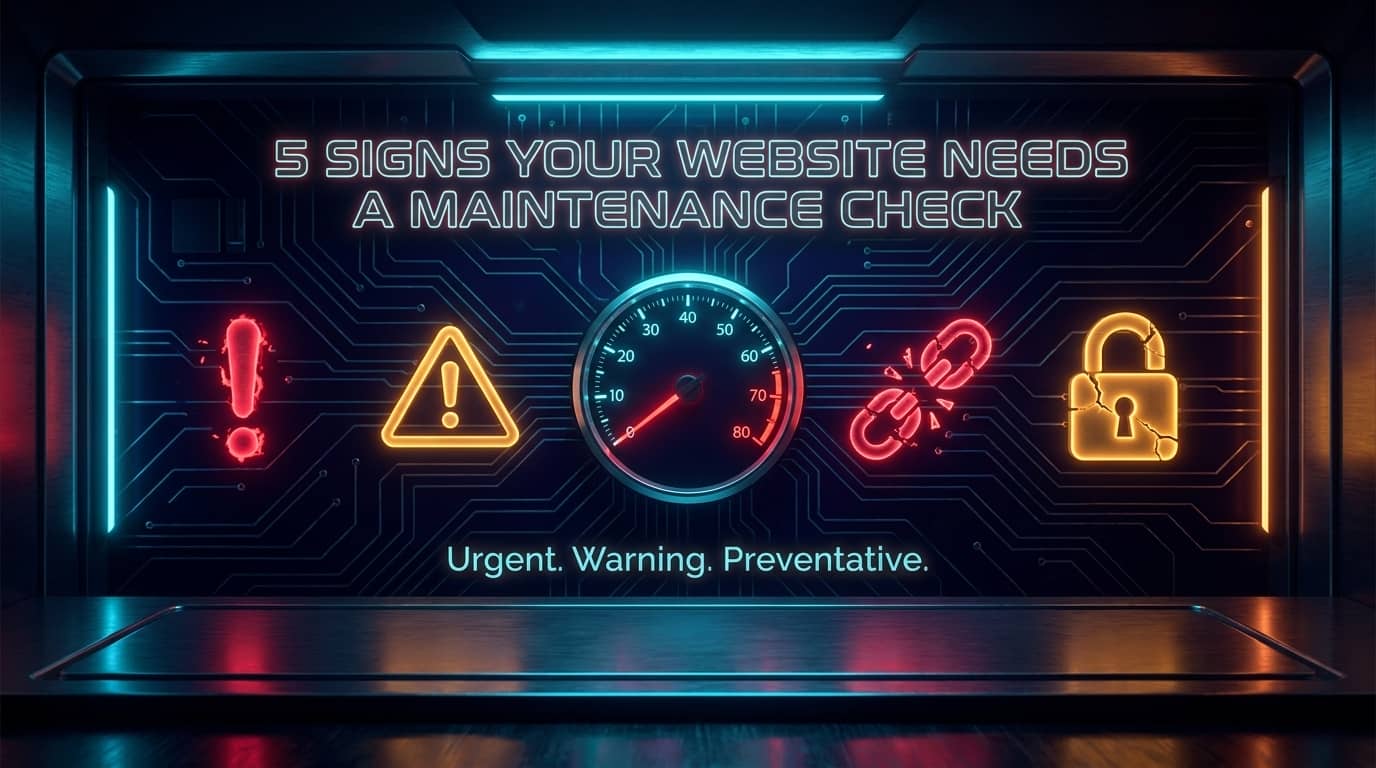
Websites are not a set-and-forget asset. Like a car, a building or any other business tool, they need regular attention to keep running properly. The difference is that website problems are often invisible until something breaks.
Here are five signs that your website is overdue for a maintenance check.
1. Your site loads slowly
If your pages take more than three seconds to load, visitors start leaving. For every additional second of load time, the bounce rate rises sharply. Slow sites also rank lower on Google, which means fewer people find you in the first place.
Common causes include oversized images, too many plugins, outdated code, poor hosting and unoptimised databases. A technical SEO audit can identify the specific bottlenecks, and ongoing website maintenance keeps performance in check before it becomes a problem.
2. Your security is out of date
Outdated software is the most common way websites get hacked. If your site runs on WordPress, Joomla or any CMS, the core software, plugins and themes need regular updates. Each update closes a known vulnerability.
A hacked site can lose rankings, get blacklisted by Google, leak customer data or redirect visitors to malicious pages. The cleanup cost is almost always higher than the cost of prevention.
Our WordPress security service covers hardening, firewall controls, malware response, backups, login protection and continuous monitoring so you catch problems before they escalate.
3. Pages are broken or missing
404 errors, broken links and missing images quietly damage both user experience and SEO. Every time a potential customer clicks a link that leads to an error page, trust erodes. Google also notices broken pages and adjusts rankings accordingly.
A maintenance check includes scanning the site for broken links, fixing redirects and ensuring every page serves the correct content. If you recently redesigned your site or moved pages, this is especially important.
4. Your content is stale
If your website still mentions last year's pricing, an outdated team list or a "coming soon" section that never arrived, visitors notice. Stale content signals that the business is not actively managed.
Content updates do not need to be dramatic. Fresh service pages, updated case studies, new testimonials and current blog posts all help. Regular content updates also give Google a reason to re-crawl your site, which can improve visibility.
Our SEO content writing service can help you keep your pages relevant and useful without spending hours writing copy yourself.
5. Your forms are not working
This is the most frustrating problem of all: traffic is arriving, but the contact form silently fails to send enquiries. Maybe the email notification goes to spam. Maybe the form has a broken field. Maybe the confirmation message shows, but the data never arrives.
This is a core part of website maintenance: testing forms, checking email delivery, monitoring uptime and making sure the technical infrastructure actually delivers the business result.
The cost of ignoring maintenance
Website problems rarely announce themselves. A form stops sending emails, but nobody notices for a week. A plugin update breaks a page layout, but only visitors see it. A security vulnerability exists for months before it is exploited. The cost of ignoring website maintenance is cumulative: small problems compound until they become expensive emergencies.
The most common maintenance failure is the one that happens silently. A contact form that sends emails to an inbox nobody checks. An SSL certificate that expires, causing browsers to show a security warning. A backup system that has not been tested and is discovered to be incomplete only when it is needed. These are not dramatic failures, but they cost real enquiries and real trust.
Regular website maintenance is the insurance against these silent failures. A good maintenance programme checks forms, verifies backups, tests page speed, reviews security, updates software and monitors uptime. It is not exciting, but it keeps the website working as a business asset rather than slowly degrading into a liability.
Building a maintenance routine that fits
The right maintenance schedule depends on how complex your site is and how much traffic it receives. A simple five-page static site needs less attention than a fifty-page WordPress site with multiple plugins and a blog. The key is having a routine that matches the risk.
At minimum, every website should have daily backups, weekly software updates, monthly form testing and quarterly security scans. For WordPress sites, the frequency needs to be higher because plugins and themes are updated constantly. Our WordPress security service includes the monitoring and response that a busy site needs.
The bottom line is that maintenance is not optional. A website is infrastructure, and infrastructure needs care. The cost of a maintenance retainer is almost always lower than the cost of recovering from a preventable failure.
A maintenance review costs less than a breakdown.
We check performance, security, uptime, forms, backups and content. Get a clear picture of what needs attention.
Book a maintenance reviewBonus: What good maintenance looks like
A healthy website maintenance programme typically includes:
- Regular software updates (core, plugins, themes).
- Daily or weekly backups stored offsite.
- Uptime monitoring with alerts.
- Form and email delivery testing.
- SSL certificate renewal and checking.
- Content updates and page refreshes.
- Performance monitoring and optimisation.
- Security scanning and firewall management.
If your website does not have these coverings, it is not a matter of if something will go wrong, but when. A dependable website maintenance service handles all of this so you can focus on running your business.